
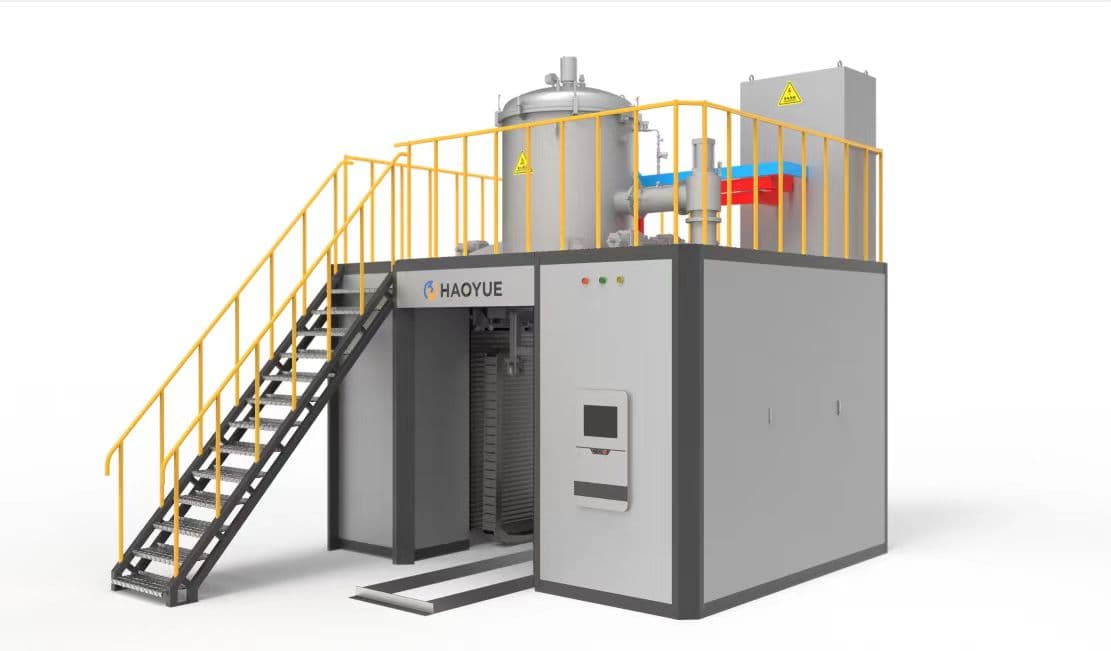
CVD/CVI
C series CVD/CVI System
CVD/CVI system configured around gas chemistry, temperature, and vacuum or exhaust needs.
High Equipment Stability / Good Temperature Uniformity / Fast Heating Speed / High Control Accuracy / Good Safety Performance Thermal induced chemical vapor dep... Exact limits for temperature, atmosphere, pressure or load, and work-zone size are confirmed in technical review; Haoyue quotes from the agreed process window. Exact limits for temperature, atmosphere, pressure or load, and work-zone size are confirmed in technical review; Haoyue quotes from the agreed process window.
Key Features
Technical Highlights
Configured for CVD or CVI routes where gas chemistry, temperature, and residence time stay controlled.
Hot-zone, gas delivery, and vacuum or exhaust packages are reviewed together against the process target.
Recipe control and data records support laboratory development and pilot validation.
Safety interlocks, purge logic, and utility interfaces are scoped during technical review.
Fixture or preform geometry is confirmed early so chamber and flow layout remain practical.
Documentation and commissioning planning follow the agreed process window.
Process Flow
CVD/CVI Process Overview
Chemical vapor infiltration densifies porous fiber preforms by depositing matrix material from reactive gases at high temperature.
Lifecycle support
Plan support alongside the equipment configuration.
Organize equipment records, technical questions, operating procedures, and handover materials around the project scope.
Selection guide
Confirm the process window before quotation.
For faster engineering review, prepare the core process boundaries before sending an inquiry.
Can the chamber be customized?
Yes. Chamber size, heating zone, fixture, pressure, and atmosphere configuration should be confirmed through technical review.
Is a process test recommended?
For new materials or demanding density targets, a sample process discussion helps reduce equipment selection risk.
What should be sent with an inquiry?
Material, target temperature, pressure or load, atmosphere, workpiece size, and expected capacity are the most useful inputs.
Typical Applications
Related products
Review similar furnace options.
SPS
Spark Plasma Sintering System
Designed for rapid sintering of ceramics, composites, metals, and functional materials under controlled pressure and atmosphere.
Hot Pressing
Vacuum Hot Pressing Furnace
Combines heating, vacuum, and mechanical pressure for high density materials and demanding thermal processes.
CVD/CVI
CVD / CVI System
Built for coating, infiltration, and high temperature deposition processes used in carbon and ceramic composites.
Gallery And Media
Review product images, equipment details, and available media before sending a technical inquiry.
Technical Downloads
Use these documents to prepare a technical proposal request with material, atmosphere, temperature, pressure, and chamber details.
C series CVD/CVI System Technical Inquiry Sheet
Send material, temperature, atmosphere, pressure or load, workpiece size, and capacity for an engineer-led configuration review.
Request Technical Proposal