
Operating-condition review
Organize the observed vacuum, heating, temperature, gas, pressure, cooling, motion, control, or mechanical condition together with the operating sequence in which it occurs.
Lifecycle support
A maintenance or troubleshooting discussion is more efficient when it begins with the observed condition, the operating context, and the available records rather than an assumed replacement or cause.
Contact Service Team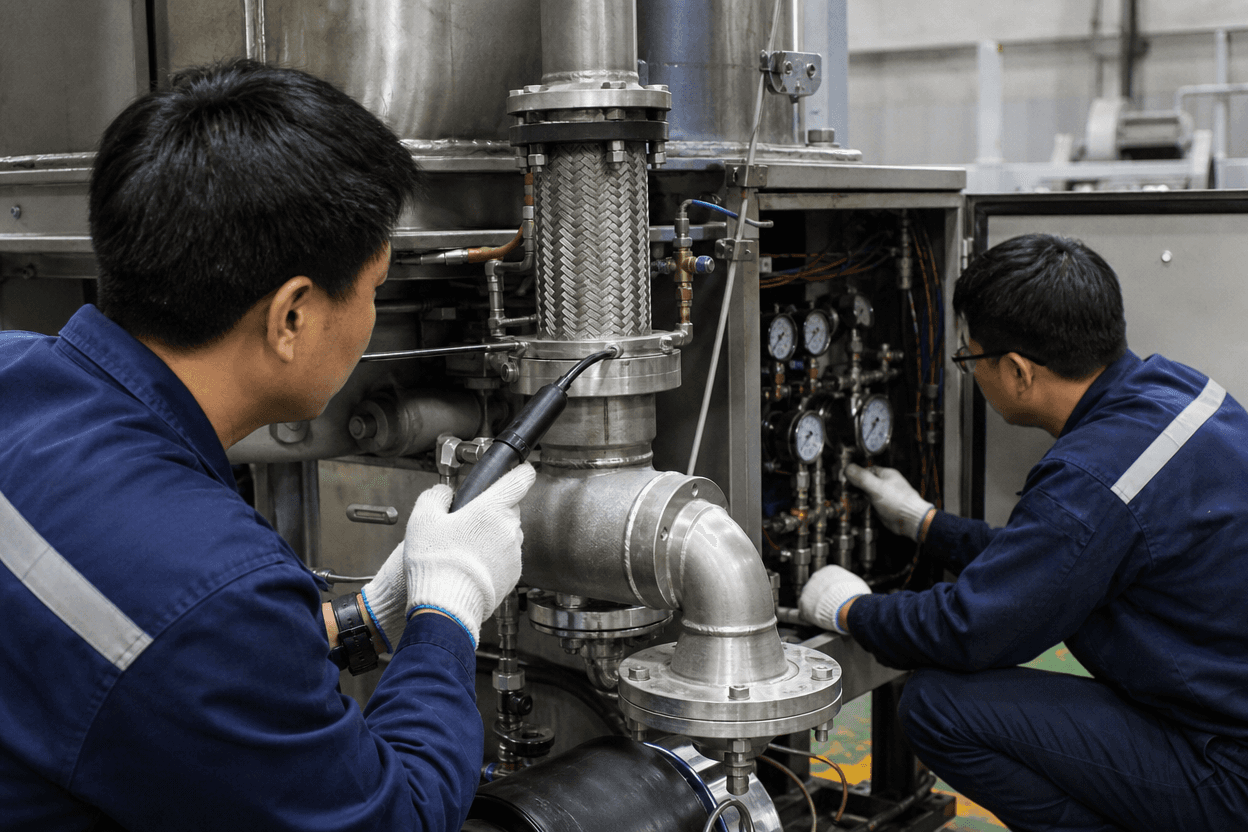
Record the observed condition
Review data and recent changes
Define safe diagnostic checks
Agree maintenance or escalation action
Service scope
Organize the observed vacuum, heating, temperature, gas, pressure, cooling, motion, control, or mechanical condition together with the operating sequence in which it occurs.
Review alarms, trend data, recipe information, maintenance history, photos, inspection notes, and any change in tooling, material, utilities, or operating practice.
Define safe inspection boundaries, required technical information, a maintenance window, and the open questions that should be resolved before work is scheduled.
Before contacting support
These inputs help identify the right next question. They do not replace a site inspection, process trial, or project-specific acceptance review.
01Equipment model, serial information if available, and current service condition
02Alarm history, recorded process data, recipe stage, and when the issue first appeared
03Photos or video of the relevant assembly, inspection findings, and recent changes
04Planned downtime, site safety constraints, utility information, and preferred contact route
Related reading
Service questions
The equipment reference, alarm history, recorded process condition, timing of the issue, photos, recent changes, maintenance records, and safe access constraints provide the strongest starting point.
Records and remote technical coordination can help identify the next questions, but the appropriate inspection method depends on the condition, equipment configuration, site safety rules, and available evidence.
Consider it when the discussion concerns controls, heating-zone condition, data requirements, capacity, safety functions, utilities, or process capability beyond a routine replacement or maintenance task.
Next step
Response timing is confirmed after scope review.