
HIP
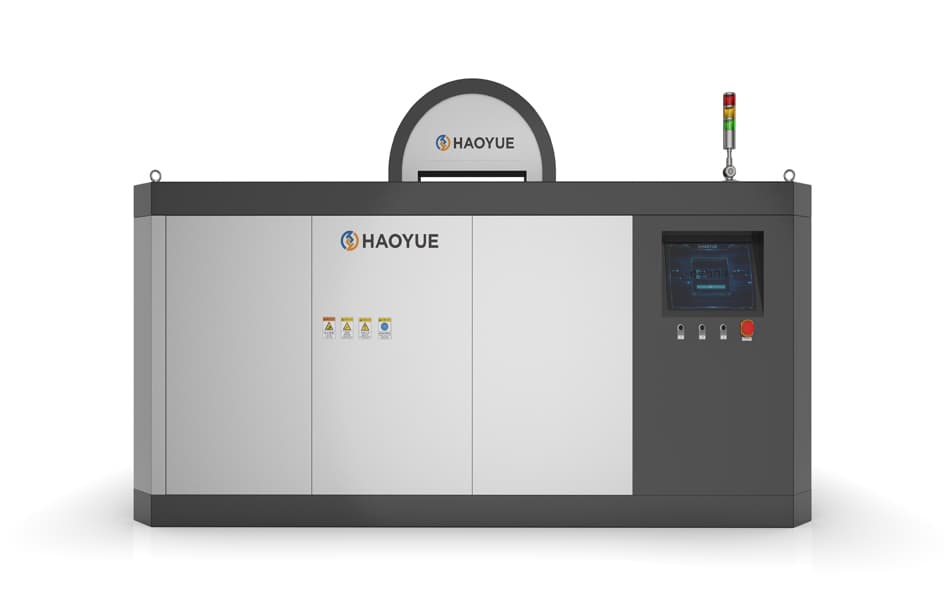
I1 Hot Isostatic Press
HIP process platform from the Haoyue legacy catalogue.
operates with a pressure range of 50 to 310 MPa , though 100 MPa is common for many applications. Temperatures typically span from 480°C for softer materials like aluminum to 1,400°C or higher for superalloys and ceramics, with some systems reaching up to 2,000°C . The pressurizing medium is usually an inert gas,...
Key Features
Technical Highlights
operates with a pressure range of 50 to 310 MPa , though 100 MPa is common for many applications. Temperatures typically span from 480°C for softer materials like aluminum to 1,400°C or higher for superalloys and ceramics, with some systems reaching up to 2,000°C . The pressurizing medium is usually an inert gas, most often argon, to prevent chemical reactions with the material.
The work zone, or "hot zone," where the material is processed, varies in size. Smaller research units might have a diameter of 100–150 mm and a height of 200–300 mm , while industrial-scale systems can exceed 880 mm in diameter and 2,150 mm in height. Heating rates are often around 20–25°C per minute, and cooling rates can reach 40°C per minute, depending on the furnace design (e.g., graphite or molybdenum furnaces). Cycle times depend on the material and desired outcome but generally range from a few hours to a full day, including heating, holding, and cooling phases.
Control systems are typically fully automated, with precise monitoring of temperature (via thermocouples, often Type C for high temperatures) and pressure. Sample size is limited by the hot zone dimensions, and maximum workload weight can range from 600 kg in mid-sized units to several tons in large production presses.
Maximum temperature (° C): 1400/2000 ° C
Common operating pressure: 100–200 MPa (15,000–29,000 psi)
Delivered via high-purity inert gas (typically argon, sometimes nitrogen)
Process Flow
HIP Process Overview
Hot isostatic pressing uses simultaneous heat and isostatic gas pressure to eliminate internal porosity and achieve near-full density.
Lifecycle support
Plan support alongside the equipment configuration.
Organize equipment records, technical questions, operating procedures, and handover materials around the project scope.
Selection guide
Confirm the process window before quotation.
For faster engineering review, prepare the core process boundaries before sending an inquiry.
Can the chamber be customized?
Yes. Chamber size, heating zone, fixture, pressure, and atmosphere configuration should be confirmed through technical review.
Is a process test recommended?
For new materials or demanding density targets, a sample process discussion helps reduce equipment selection risk.
What should be sent with an inquiry?
Material, target temperature, pressure or load, atmosphere, workpiece size, and expected capacity are the most useful inputs.
Official Specification Tables
Imported from Haoyue's official product data and reorganized for clearer technical review.
| Product number | Furnace size (mm) | Gas pressure (MPa) | Heating material | Heating power (kw) | Vacuum degree(Pa) | Max. temperature (°C) |
|---|---|---|---|---|---|---|
| I1CC20 | Φ 100x150 | 200 | C/C | 50 | 10 | 2000 |
| 11MO14 | Φ 100x150 | 200 | MO | 50 | 10 | 1400 |
Typical Applications
Related products
Review similar furnace options.
HIP
I1 HIP Furnace
I1 is available as an I Series HIP furnace detail page with product media and technical inquiry support for configuration review.
HIP
I2 HIP Furnace
I2 is available as an I Series HIP furnace detail page with product media and technical inquiry support for configuration review.
HIP
I3 HIP Furnace
I3 is available as an I Series HIP furnace detail page with product media and technical inquiry support for configuration review.
Gallery And Media
Review product images, equipment details, and available media before sending a technical inquiry.
Technical Downloads
Use these documents to prepare a technical proposal request with material, atmosphere, temperature, pressure, and chamber details.
HIP Furnace Requirement Sheet
Technical intake sheet for hot isostatic pressing projects, including material, pressure, chamber size, and batch expectations.
Request Technical Proposal